 KEY-IOT
SEARCH
— 葡萄酒 | 威士忌 | 白兰地 | 啤酒 —
— 葡萄酒 | 威士忌 | 白兰地 | 啤酒 —
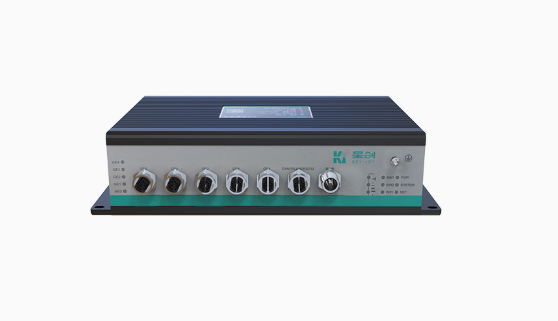
We’ve been fielding a lot of questions lately about the SV910 and SV900 vehicle routers—specifically, which one makes sense for different projects. Honestly, looking at spec sheets alone makes it easy to get confused. These two products target different use cases, and the differences matter once you get into real deployments.
Let me break down both vehicle routers from a technical support standpoint, covering what actually matters when you’re making a selection decision.
Let’s cut to the chase. The SV910 is a high-performance vehicle Ethernet gateway built around TSN time-sensitive networking and V2X vehicle-to-everything communication. The SV900 is a general-purpose 5G vehicle router emphasizing interface versatility and secondary development capabilities.
Think of it this way: the SV910 is like a purpose-built race car with everything tuned for peak performance. The SV900 is more like a rugged off-road vehicle—tough, adaptable, handles whatever terrain you throw at it. Which one you pick depends entirely on what road you’re driving.
The SV910 runs a quad-core 64-bit Cortex-A55 processor. The SV900 uses a dual-core A53.
Don’t underestimate this gap. The A55 delivers roughly 20% better single-core performance compared to the A53. Double the core count on top of that, and you’re looking at a substantial difference in overall computing capability.
Where does this show up in practice? Mainly during heavy multitasking. The SV910 can simultaneously handle dual 5G data transmission, V2X communications, multi-port Ethernet switching, and CAN bus data collection—four cores each managing their own workload without stepping on each other. The SV900’s dual-core setup faces more scheduling pressure when juggling complex tasks.
That said, if your application is relatively straightforward—basic 5G backhaul plus a few sensor streams—the A53 dual-core handles it just fine. No point paying for horsepower you won’t use.
This is where the two vehicle routers diverge most significantly. It’s also the key factor in most selection decisions.
The SV910 comes equipped with six automotive Ethernet ports supporting 100BASE-T1 and 1000BASE-T1 standards. These interfaces hit 1Gbps speeds using just a single twisted pair—saving 75% on cable weight and cost compared to traditional four-pair solutions. Two additional M12 industrial Ethernet ports handle external device connections.
The SV900 takes a different approach: five M12 Ethernet ports, all using aviation-grade connectors. M12 interfaces offer excellent water and dust resistance with long plug/unplug lifecycles, maintaining stable operation from -40°C to +85°C.
How do you choose? Look at what interfaces your onboard equipment actually uses.
For new development projects where all vehicle devices support T1 interfaces, the SV910’s automotive Ethernet configuration saves serious wiring harness costs while reducing overall vehicle weight. One mining truck customer shaved several kilograms just from cable reduction alone.
For retrofit projects or vehicles with mixed equipment—older 100Mbps devices alongside newer gigabit gear—the SV900’s universal M12 interfaces prove easier to work with. No protocol conversion headaches.
This capability represents the SV910’s core value proposition. The SV900 doesn’t offer it.
The SV910 supports IEEE 802.1AS GPTP protocol and IEEE 1588v2 PTP protocol, achieving nanosecond-level time synchronization precision. For autonomous driving multi-sensor fusion, this matters enormously.
Here’s a concrete example: a vehicle equipped with lidar, millimeter-wave radar, and cameras needs to fuse data from all these sensors. If sensor clocks drift by a few dozen milliseconds, fusion algorithms produce incorrect target positions. At 60 km/h, a 10-millisecond timing offset translates to roughly 17 centimeters of position error—dangerous at high speeds.
The SV900 lacks TSN functionality. If your application demands tight time synchronization, this vehicle router won’t cut it. But for data backhaul, remote monitoring, and similar applications, standard network timing works perfectly fine.
The SV910 includes an integrated V2X module supporting vehicle-to-vehicle (V2V) and vehicle-to-infrastructure (V2I) communication. The SV900 doesn’t have this feature.
When does V2X prove useful? Primarily in scenarios requiring direct communication between vehicles or between vehicles and roadside equipment.
Mining operations use this heavily. Mine roads run narrow—when two haul trucks meet, one needs to yield. Through V2X, both trucks exchange position and speed data in advance, with the system automatically coordinating who gives way. No dispatch center involvement required. This approach beats sensor-only perception because V2X communication ignores line-of-sight limitations—it works around blind corners where cameras and lidar can’t see.
If your project doesn’t involve vehicle-road coordination and vehicles only communicate with cloud platforms, V2X functionality goes unused. The SV900 makes more economic sense in that case.
Both vehicle routers support dual 5G, though implementation details vary.
The SV910 supports dual 5G with flexible mode selection, plus RedCap compatibility. RedCap is 5G’s lightweight variant—lower power consumption, lower cost, ideal for applications that don’t need maximum bandwidth but care about energy efficiency.
The SV900 similarly supports dual 5G or 5G+4G combinations, also with RedCap network compatibility. Additionally, the SV900 includes a built-in multi-network aggregation SDK, giving developers more granular control over link switching strategies during secondary development.
Field testing shows dual 5G configurations keeping critical control signal latency under 15ms in complex urban traffic conditions. Single 5G solutions can spike past 50ms during network congestion. In signal-challenging environments like mine pits, dual 5G advantages become even more apparent—when one link weakens, the other picks up the slack.
Both vehicle routers support low-power sleep mode and remote wake-up.
In low-power mode, the gateway cuts power to most peripherals while maintaining essential monitoring modules. Upon receiving a wake command, it powers back up with full initialization completing in roughly one minute.
This feature proves valuable for vehicles that don’t run 24/7. Mining trucks enter deep sleep during non-operational hours, then get remotely awakened via 5G network when work begins—essentially “cloud-based one-button startup.”
Both products handle this functionality similarly. Either meets the requirement.
The SV910 includes three CAN ports, two DI inputs, and two relay outputs. Those relay outputs are interesting—they can directly control certain vehicle actuators without requiring additional control modules.
The SV900’s standout feature is NTRIP protocol support—a differential data transmission protocol used in high-precision positioning. If your project requires RTK positioning, the SV900 can pull differential corrections directly from CORS stations, eliminating an intermediate step. The SV900 also supports log FLASH storage and network monitoring, enabling post-incident log analysis for troubleshooting.
The SV900 also emphasizes secondary development capabilities. If your team wants deep customization options, this vehicle router proves more accommodating.
After all that, here’s a straightforward selection guide:
Choose the SV910 when:
Choose the SV900 when:
Vehicle router selection isn’t about right or wrong—it’s about matching requirements. I’ve seen customers insist on the SV910, then never use V2X or TSN features. Pure waste. I’ve also seen customers choose the SV900 to save money, then discover time synchronization precision falls short, forcing equipment replacement and project rework.
My recommendation: clarify your requirements before selecting. If anything’s uncertain, reach out to technical support for a conversation. Getting the vehicle router choice right saves considerable development and debugging effort down the road.
Questions about specific projects? Technical support is always available to help.
Mo
 English English
  Español de Perú
 Русский
 العربية
 日本語
日本語
 简体中文
简体中文
 Français
 Deutsch
 繁體中文
繁體中文