 キーIOT
キーIOT
検索
- 葡萄酒|威士忌|白兰地|啤酒-。
- 葡萄酒|威士忌|白兰地|啤酒-。
In 2026, competition in the intelligent vehicle sector has moved well beyond its initial stages. With the comprehensive upgrade of end-to-end autonomous driving foundation models and high-level automated driving technologies, “data throughput” and “collaborative perception efficiency” have emerged as the new core metrics dictating a vehicle’s overall intelligence. Amidst this profound digital transformation of vehicles, the sweeping upgrade of automotive communication technology serves as the underlying logic reshaping intelligent mobility.
Specifically, Automotive Ethernet (In-Vehicle Network / IVN), 5G & 5G-Advanced (Cloud Network), and C-V2X (Road Network) act as the “three pillars” supporting the cross-dimensional evolution of intelligent vehicles. Together, they are comprehensively reconstructing the vehicle’s internal network architecture, extending the cloud ecosystem, and redefining the boundaries of collective intelligence in vehicle-road coordination.
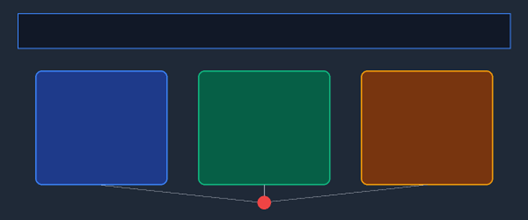
Figure 1: Overview of the “Tri-Network Convergence” Architecture (In-Vehicle, Cloud, and Road Networks) for Intelligent Vehicles in 2026
I. Automotive Ethernet: Advancing from “Localized Connectivity” to a “Unified In-Vehicle Backbone Network (Unified IVN)”
Entering 2026, Zonal Architecture based on central computing and zonal control has been fully implemented in mainstream intelligent electric vehicles. The bandwidth of traditional low-speed buses like CAN and LIN, which were widely utilized over the past decades, has long become inadequate to handle massive data throughput. Consequently, Automotive Ethernet is entering a definitive era of vehicle-wide adoption, evolving completely from localized applications previously confined to infotainment systems or specific ADAS functions into a unified in-vehicle backbone network covering the entire vehicle lifecycle.
At the technical level, Multi-Gigabit technology has reached a full-scale breakthrough in 2026. High-speed Automotive Ethernet links ranging from 1 Gbps to 10 Gbps+ have become standard configurations for next-generation intelligent driving models. This enables the lossless transmission of massive amounts of uncompressed raw sensor data with near-zero packet loss, providing a robust foundation for upper-layer data fusion and processing.
In practical deployment, the zonal control architecture of the latest generation of high-end pure electric SUVs from certain domestic automakers vividly exemplifies this trend. These pioneering models deeply integrate next-generation high-speed Automotive Ethernet PHY (physical layer) chips into body gateways and zonal controllers. By interconnecting the Central Compute Unit (CCU) with four zonal controllers via an ultra-high-speed Ethernet backbone, data from sensors and actuators distributed throughout the vehicle can achieve ultra-low, microsecond-level synchronization latency.
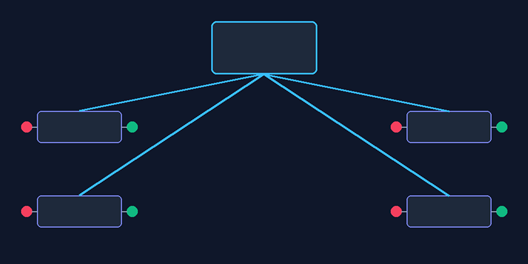
Figure 2: Automotive Ethernet Backbone Network Topology Based on Central Computing and Zonal Controllers
II. Large-Scale Commercialization of 5G-Advanced (5G-A): Opening Up the Ultra-Wide “Vehicle-to-Cloud” Data Pipeline
If Automotive Ethernet perfectly facilitates the flow of “internal network” lifeblood within the vehicle, then 5G and 5G-A technologies serve as the “main arteries” connecting the vehicle to the vast expanse of cloud-based AI computing power.
More strikingly, 2026 marks a critical inflection point for the full-scale, commercial deployment of 5G-A (5G-Advanced) technology. The underlying logic of the Internet of Vehicles (IoV) has evolved from simple “network traffic connectivity” into “multidimensional experience monetization and vehicle-cloud integrated data feedback loop.”
In the autonomous driving domain: Current end-to-end foundation models demand massive amounts of high-quality, real-world road test data containing diverse corner cases. The ultra-large uplink bandwidth (gigabit-level uplink speeds), combined with the highly reliable, low-latency network characteristics of 5G-A, perfectly addresses the industry pain point of backhauling massive volumes of high-value driving data to the cloud in real time.
Inside the intelligent cockpit: The massive throughput of 5G-A networks is also paving the way for premium entertainment experiences—such as independent multi-screen 4K/8K ultra-HD video streaming and immersive high-bandwidth 5G cloud gaming—to become standard for ordinary consumers.
Take the SV920 as an example, a next-generation automotive-grade dual-5G DSDA (Dual SIM Dual Active) dual-channel in-vehicle gateway teased by XingChuang YiLian for release around July 2026. Built profoundly on the latest standards, this product perfectly matches the commercial 5G-A networks of mainstream operators. This advanced automotive-grade gateway empowers the intelligent driving terminal to truly become a cloud-connected AI mobile node capable of self-learning and real-time evolution.
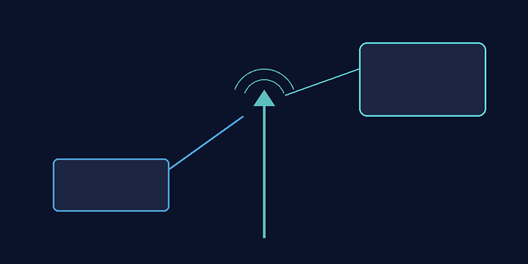
Figure 3: The “Vehicle-Cloud Integrated” Autonomous Driving Foundation Model Data Backhaul Pipeline Empowered by 5G-A Ultra-Large Uplink Bandwidth
III. C-V2X Breaking Through “Visual Blind Spots”: Collaborative Intelligence Advances Toward Large-Scale Commercialization
Alongside the expansion of national “Vehicle-Road-Cloud Integration” pilot cities from isolated trials to full-scale regional networks, C-V2X direct communication technology is shedding its old label as a mere “demonstration zone project” and advancing into the stage of large-scale, factory-installed mass production. Although stand-alone vehicle intelligent sensors (such as LiDAR, millimeter-wave radar, and high-precision cameras) are growing increasingly powerful, they are naturally constrained by the line-of-sight propagation of physical light. Consequently, inherent blind spots remain when dealing with “hidden pedestrian dashes” (ghost cuts), beyond-visual-range traffic conditions, and severe weather.
C-V2X technology remedies this by utilizing low-latency, direct broadcast communication across Vehicle-to-Vehicle (V2V), Vehicle-to-Infrastructure (V2I), and Vehicle-to-Pedestrian (V2P) channels, granting intelligent vehicles a “bird’s-eye view” that transcends the limits of physical sight. Furthermore, in 2026, vehicle-side hardware technology has achieved modular breakthroughs. Relying on highly integrated hardware solutions and protocol stack optimizations, cross-provincial and cross-regional connectivity and coordination have been vastly enhanced.
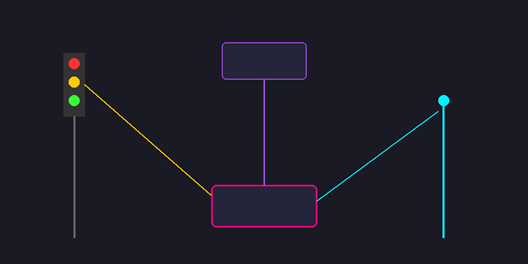
Figure 4: Cellular V2X (C-V2X) Enabling Multidimensional, “Vehicle-Road-Cloud Integrated” Collective Collaborative Intelligent Perception
IV. Conclusion: Tri-Network Convergence Building a New Ecosystem for Intelligent Vehicles in 2026
In a rapidly shifting landscape, the profound transformation of automotive communications in 2026 is redefining intelligent vehicles in a subtle yet pervasive manner. The convergence and symphony of these three communication trends are completely reshaping the automobile from an “isolated mobile terminal” into an indispensable core value node of future smart cities and intelligent transportation ecosystems, powered by outstanding collaborative intelligence.
Enter the result
Verification failed
 English English
 Español de Perú
 Русский
 العربية
 日本語
日本語 简体中文
简体中文 Français
 Deutsch
 繁體中文
繁體中文