 KEY-IOT
بحث
— 葡萄酒 | 威士忌 | 白兰地 | 啤酒 —
— 葡萄酒 | 威士忌 | 白兰地 | 啤酒 —
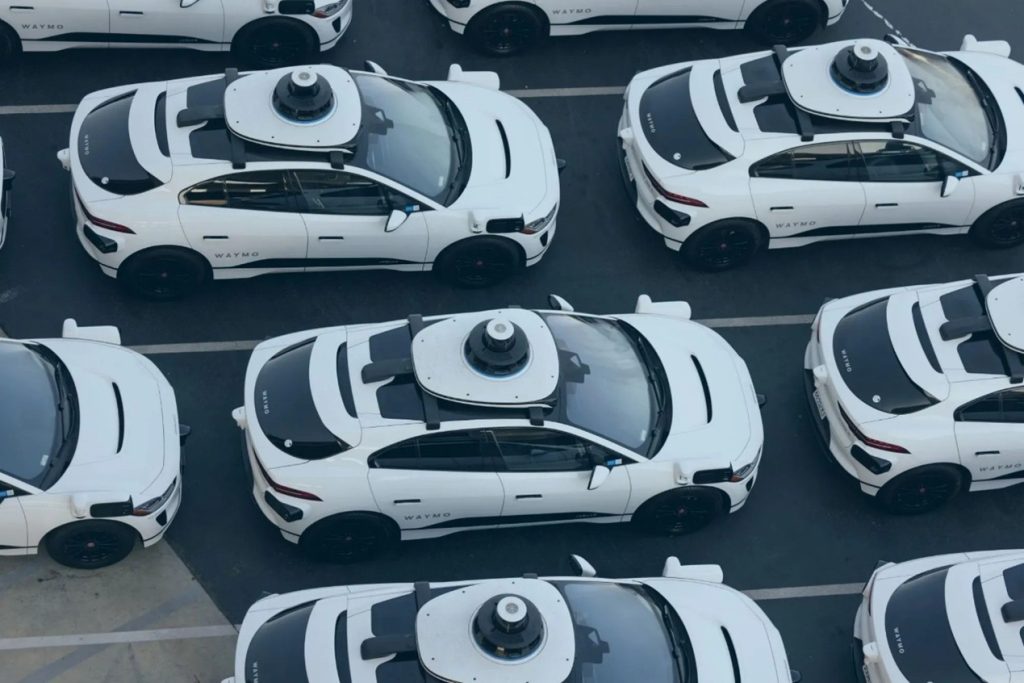
Fifty Level 4 autonomous taxis are providing 24-hour driverless transportation services to the public.
This is not a test project; it is a real commercial Robotaxi fleet that runs on city roads.
Each vehicle is equipped with 11 high-definition cameras, 5 lidar, 6 millimeter-wave radars, and an autonomous driving domain controller with a computing power of 200 TOPS—the perception hardware is plentiful, but what brings this system to life is a key role that is often overlooked in the vehicle: the in-vehicle gateway.
What are Robotaxi’s biggest fears?
Level 4 autonomous driving places far more stringent communication requirements on than ordinary connected devices:
In short: Robotaxi needs more than just connectivity; it needs an in-vehicle communication hub designed specifically for autonomous driving.
As a dual 5G automotive Ethernet gateway, the SV910 undertakes three core responsibilities in this fleet:
▌ High-speed convergence of vehicle-side data
The SV910 vehicle gateway is equipped with 6 vehicle Ethernet interfaces, which can directly connect to devices such as LiDAR, cameras, and domain controllers to aggregate scattered sensor data at high speed and ensure that the perceived information is transmitted to the computing unit without bottlenecks.
▌ Vehicle-Road-Cloud Collaborative Communication
With its built-in V2X module, the SV910 enables full-domain data interaction between vehicles (V2V), between vehicles and the roadside (V2I), and between vehicles and the cloud (V2C), with millisecond-level response, allowing each vehicle to make autonomous decisions and integrate into the city-level dispatch system.
Nanosecond-level time synchronization
One of the most challenging issues in multi-sensor fusion is timing—data from different hardware must be aligned to the same point in time to synthesize an accurate world model. The SV910 supports GPTP/PTP precise timing protocols, reducing the time synchronization accuracy of multiple sensors to the microsecond level.
How can stability be guaranteed when 50 machines are online simultaneously?
The biggest difference between commercial operation and testing phases is the necessity for stability.
The SV910’s dual 5G architecture is key to the continuous operation of this fleet—two 5G networks serve as backups for each other, providing redundancy in urban environments with base station switching and signal fluctuations, and avoiding connection risks caused by single-point interruptions.
Meanwhile, the SV910 supports low-power sleep mode and remote wake-up. It automatically reduces power consumption during idle waiting and is activated immediately upon receiving an operational dispatch command, saving the vehicle’s power consumption without affecting any operational response speed.
For fleet managers, the real-time monitoring and remote maintenance of 50 vehicles can also be handled through the cloud management capabilities of the SV910.
Starting from Qianhai, extending to a larger scale
The commercialization of this Robotaxi fleet proves one thing:
As autonomous driving enters the stage of large-scale operation, in-vehicle communication is no longer just a component, but a core variable that restricts the overall system reliability.
In this scenario, the SV910 demonstrates not only product performance, but also Starlink’s deep understanding of the communication needs of high-level autonomous driving—from interface design and protocol support to redundant architecture and remote management, each aspect points to real operational challenges.
With the accelerating commercialization of Robotaxi in China, there will be more and more vehicles on urban roads. The entire T- ‑Box industry is undergoing a profound transformation from single-function to all-encompassing integration. A stable, online central nervous system like this is needed.
Enter the result
Verification failed
 English English
 Español de Perú
 Русский
 العربية
 日本語
日本語 简体中文
简体中文 Français
 Deutsch
 繁體中文
繁體中文