 KEY-IOT
بحث
— 葡萄酒 | 威士忌 | 白兰地 | 啤酒 —
— 葡萄酒 | 威士忌 | 白兰地 | 啤酒 —
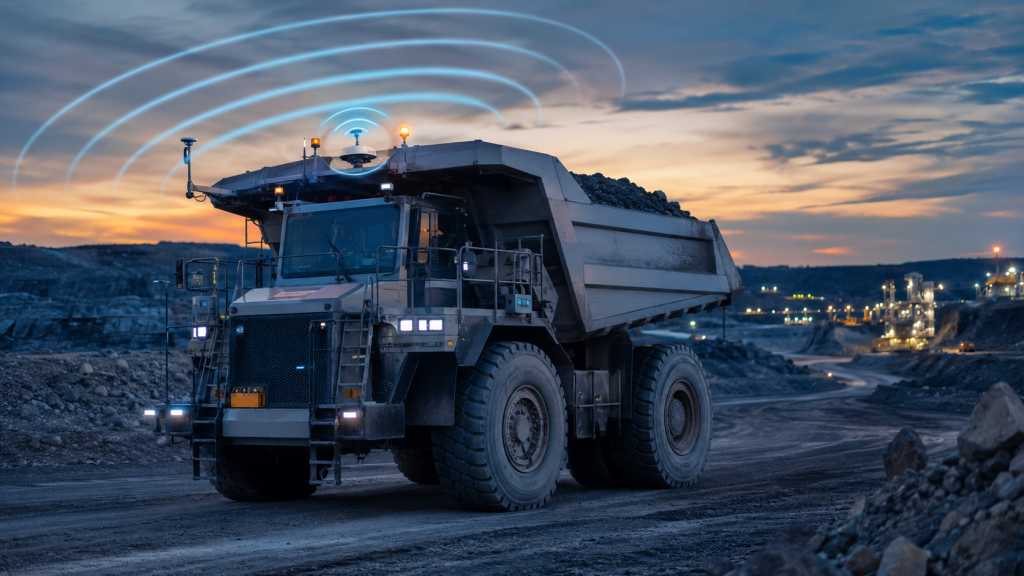
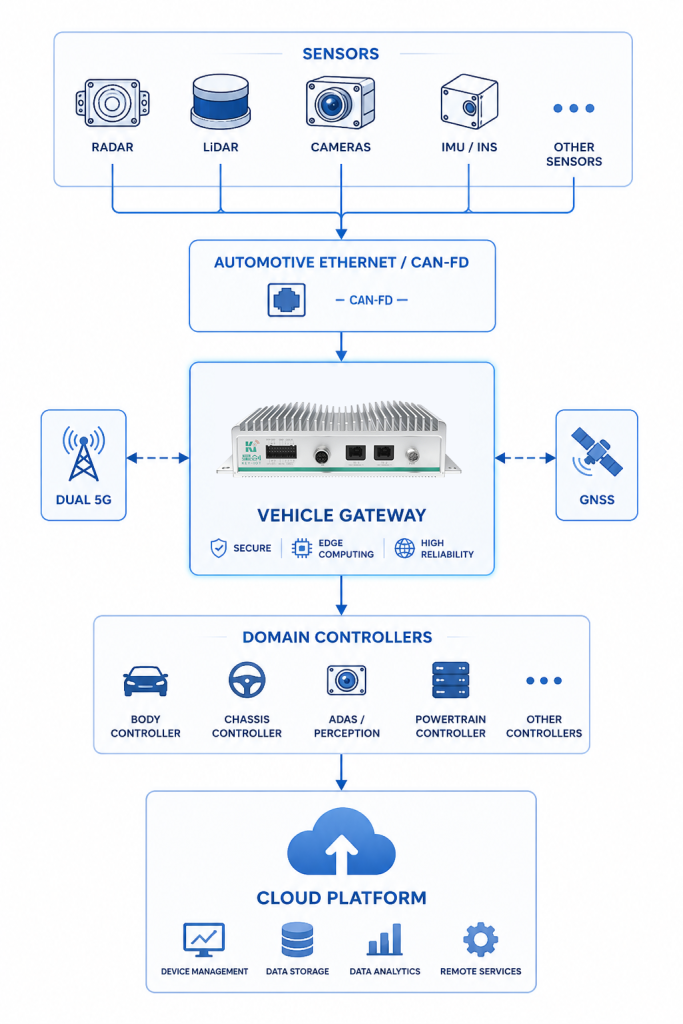
Modern autonomous vehicles bring together multiple communication networks, domain controllers, sensors, and external connectivity systems. As vehicle E/E architectures move from distributed ECUs toward domain- and zone-oriented designs, the vehicle gateway is taking on more responsibility than simple protocol conversion.
A traditional vehicle gateway handles communication between different vehicle networks. In connected and autonomous vehicle architectures, it also functions as the networking hub between in-vehicle networks, cellular connectivity, and cloud-based fleet management platforms.
The exact role of a gateway varies by architecture — in some platforms, gateway functions are combined with telematics; in others they stay separate from domain controllers and Ethernet switches. But across our deployments with Robotaxi, mining truck, and port logistics fleets, one pattern holds: the engineering challenge isn’t moving more data, it’s coordinating interfaces, redundancy, environmental durability, and remote management across a system that has to run unattended for years.
Commercial autonomous vehicles operate where communication equipment has to handle both high data volumes and demanding physical conditions. Three areas matter most.
Autonomous vehicles generate large volumes of data from cameras, LiDAR, radar, positioning systems, and vehicle controllers. CAN and LIN networks remain the backbone for control and status information, while higher-bandwidth applications increasingly run over automotive Ethernet.
The gateway routes and aggregates traffic between vehicle networks; high-bandwidth sensor processing typically stays within dedicated domain controllers or computing platforms. The practical engineering question is not “how much bandwidth,” but which components generate the data, which process it, and which network paths carry it to the right place at the right time.
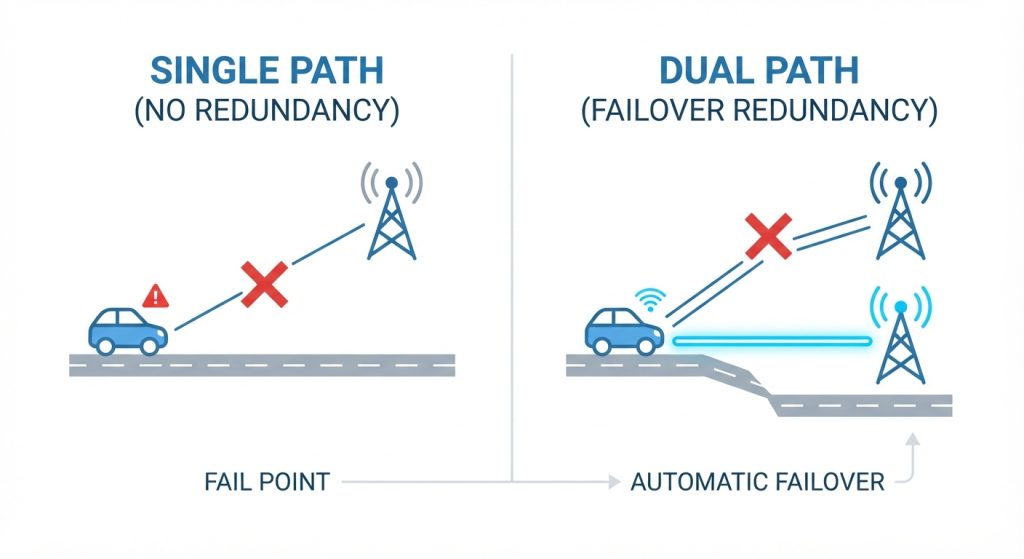
Autonomous fleets operate in environments with uneven cellular coverage — urban canyons, open-pit mines, ports, and long-haul routes. A single cellular path degrades under coverage gaps, congestion, or handovers.
Dual-modem and dual-SIM designs address this by keeping a second path available when the first one drops. In a Xinjiang open-pit coal mine deployment, over 100 autonomous mining trucks have run for more than a year across extreme winter-to-summer temperature swings using dual-5G links with carrier aggregation and cold-backup — cutting incident rates during adverse weather and night operations by 90%.
Failover behavior still depends on the modem architecture, carrier configuration, and software implementation, so it needs validating under the actual deployment conditions rather than assumed from the spec sheet alone. For remote monitoring or remote intervention use cases, that validation step is non-negotiable — a dropped link during a takeover request is a safety event, not an inconvenience.
Industrial autonomous vehicles run under continuous vibration, wide temperature swings, humidity, dust, and electrical transients. Required specifications vary by platform: a port crane gateway needs IP66 protection against salt spray and dust; a mining truck gateway needs to survive both desert heat and sub-zero winters without a fan.
Evaluation should cover operating temperature range, enclosure protection rating, vibration resistance, power-input tolerance, thermal design, and long-term operating stability — not as a checklist to skim, but as the actual failure modes a fleet will encounter in year two or three of service.
A production vehicle gateway should be selected against the complete vehicle communication architecture, not a single headline spec.
Cellular reliability is a design decision, not an afterthought, for autonomous fleet communication.
A gateway may use dual 5G modems, multiple SIM configurations, or other redundant architectures to keep a link available when one path fails. These functions are often marketed loosely, but they are not interchangeable, and confusing them leads to procurement mistakes:
Ask a vendor which of these six functions their product actually delivers, and get the answer in writing — a spec sheet that says “dual 5G” without specifying which of the above it means isn’t giving you enough to design around.
A vehicle gateway connects legacy vehicle buses with automotive Ethernet and other network technologies.
The right interface combination comes from the vehicle’s network topology and the division of responsibilities between the gateway, domain controllers, and other networking components — not from picking the gateway with the longest interface list.
Interface comparison across common deployment tiers
| المتطلبات | Entry-level (e.g. SV900) | Mid-tier (e.g. SV910) | Domain controller (e.g. SV920) |
| Cellular | Dual 5G | Dual 5G | Dual 5G NR, dual-SIM dual-standby |
| إيثرنت السيارات | M12-type, up to 5 ports | Up to 6 ports + 2 M12 industrial Ethernet | High-integration architecture, CAN-FD |
| CAN / CAN-FD | 1x (232/485/CAN combo) | 2x, expandable to 3 | CAN-FD, expandable |
| V2X | — | Deeply integrated | Deeply integrated |
| Time sync | — | PTP/GPTP | PTP/GPTP |
| Typical use case | Robotaxi, sweepers, delivery robots | Robobus, port logistics, high-density sensor fusion | Large-scale autonomous fleets needing domain-level control |
Table 1. Exact specifications vary by product revision — confirm against the current datasheet before finalizing a design.
Modern gateways provide processing resources for edge applications: data preprocessing, protocol conversion, local monitoring, and device management.
Whether that runs on embedded Linux or another platform, the capabilities that matter over a multi-year deployment are software update mechanisms, APIs, development tools, diagnostics, and remote management — these determine how much it costs to keep a fleet of 100+ vehicles running without a truck roll for every firmware bug.
Hardware security components such as TPMs or secure elements support device identity, key protection, and secure-boot trust chains. Firewalling and packet inspection are handled by the gateway’s networking and security software stack — features that matter more, not less, once a vehicle’s gateway is remotely reachable from a fleet-management cloud.
Different vehicle classes create different communication requirements. The gateway should be selected for the actual operating environment, not a generic use case.
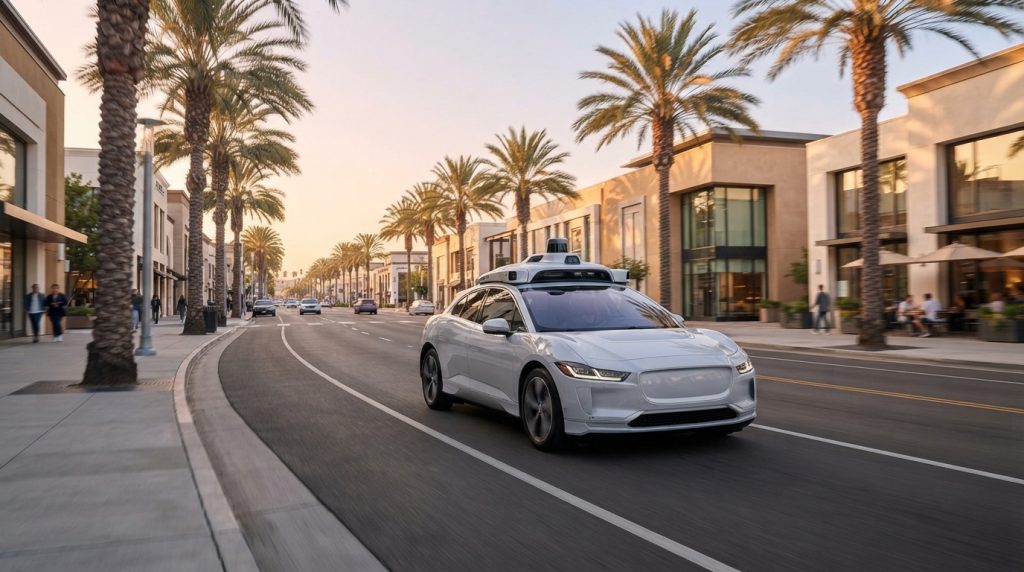
Robotaxis and Robobuses operate in dynamic urban environments where reliable connectivity supports fleet coordination, telemetry, remote monitoring, software management, and remote intervention.
In a Middle East deployment covering over 100 Robotaxis, extreme heat, dust, and sparse network coverage were the main obstacles. Dual-5G with seamless multi-mode switching and link-bonding kept dispatch and map updates running smoothly in weak-signal zones, while a shock-resistant chassis and wide operating-temperature design kept sensor data flowing without interruption through desert conditions and rough roads.
The gateway carries the communication path between the autonomous driving domain controller, vehicle networks, cellular networks, and cloud fleet-management systems. The autonomous driving stack itself stays on dedicated compute — the gateway’s job is making sure that stack never loses its connection to the outside world.
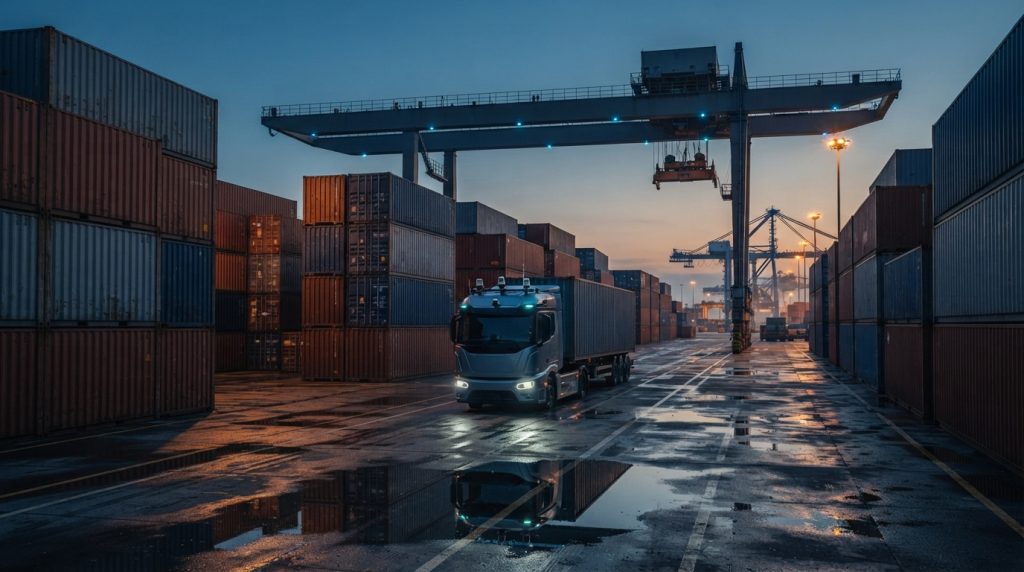
Autonomous heavy trucks and port vehicles operate across industrial yards, logistics routes, and other environments where vibration, temperature swings, and cellular coverage gaps directly affect uptime.
A Xiamen Hairun smart port project connected unmanned container trucks, gantry cranes, and port operations systems over dual-5G with IP66-rated enclosures to withstand splash and dust, precise positioning for container handling, and dual-SIM backup for continuous data flow. The result: port operating efficiency improved by more than 30%.
For these deployments, gateway selection should weigh mechanical and environmental requirements, cellular connectivity, vehicle Ethernet and CAN/CAN-FD interfaces, GNSS requirements, remote diagnostics, and power-input characteristics together — not one spec in isolation. The gateway carries traffic from sensors, domain controllers, vehicle control systems, and fleet-management platforms, while high-volume perception processing stays on dedicated computing hardware.
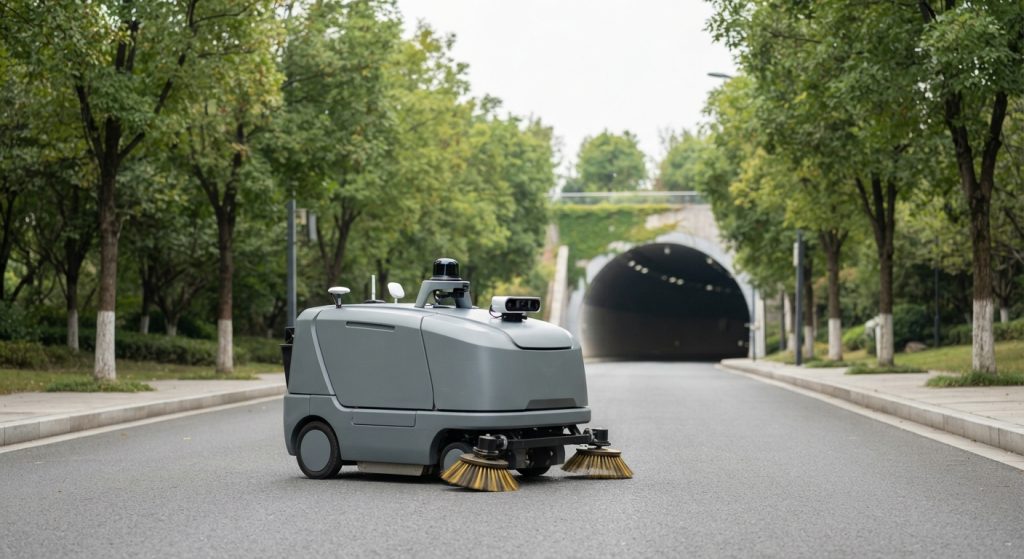
Low-speed autonomous sweepers and mobile robots face tighter space and power constraints than heavy autonomous vehicles.
A fleet of unmanned sweepers deployed in Yunnan runs in areas where dense forest cover and tunnels block standard base-station signal. Dual-5G with a multi-network acceleration scheme (transmit-and-select-fastest across links) kept control-signal latency in the low milliseconds and let the fleet run 24/7 with a compact, fanless gateway — cutting labor costs while keeping uptime near-continuous.
Outdoor deployments need appropriate ingress protection, temperature range, vibration resistance, and power management — determined by the vehicle enclosure, installation position, operating environment, and duty cycle, not assumed from a single protection rating that “should be enough.”
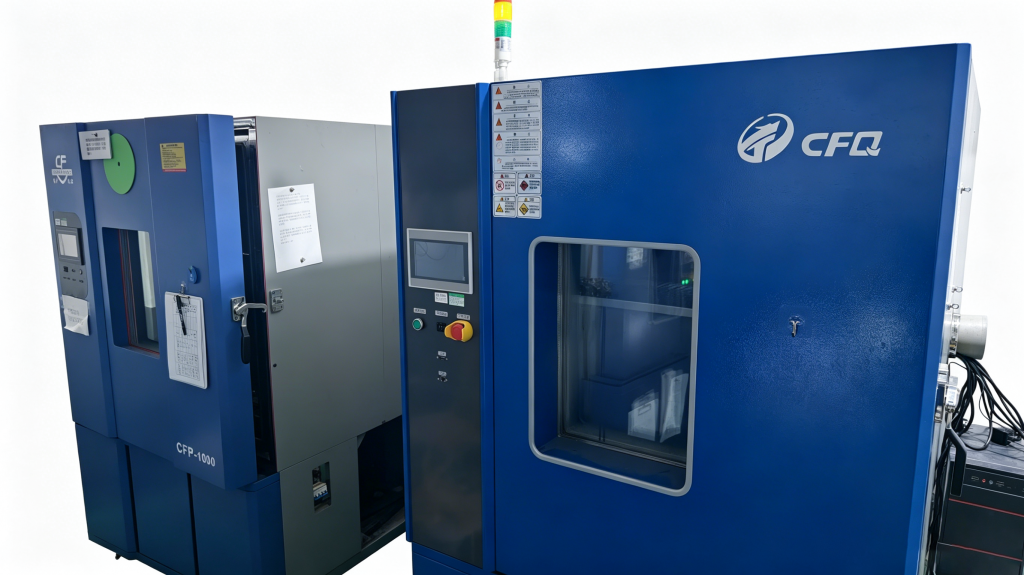
For OEMs, system integrators, fleet operators, and engineering teams, gateway selection covers more than cellular bandwidth.
Start with the vehicle’s operating environment and applicable market requirements: operating temperature, ingress protection, vibration and mechanical testing, electrical transient testing, EMC requirements, power-input range, and thermal design.
Automotive and industrial testing requirements should map to the actual vehicle platform and target market. ISO 16750 applies when evaluating environmental conditions and testing for road-vehicle electrical and electronic equipment; UNECE Regulation No. 10 may also apply for electromagnetic compatibility type-approval. Always verify certification or test claims against the specific product, test report, target vehicle, and market — a certificate for one product variant doesn’t automatically cover another.
For long-lifecycle autonomous fleet deployments, software support has a direct impact on total maintenance effort — often more than the hardware spec sheet.
What matters in practice: embedded Linux or another suitable operating environment, APIs and SDKs, remote configuration, remote firmware updates, diagnostics and logging, network-management tools, and integration with existing fleet-management software. For OEM and system-integrator projects, the ability to adapt software and interfaces to the vehicle architecture is as important as the hardware itself — a gateway that can’t be reconfigured without a factory return isn’t fit for a fleet that will run for five years.
Off-the-shelf industrial routers rarely match the mechanical, electrical, interface, and software requirements of specialized autonomous vehicles.
For projects that need customization, an experienced hardware manufacturer should be able to work through interface configuration, enclosure and mounting, cellular bands for the target market, antenna design, power architecture, software integration, and production lifecycle support — with the manufacturer’s development capability, documentation quality, sample-validation process, and long-term support evaluated alongside the product itself. We built our own automated production lines, ISO 9001/14001/45001-certified quality system, and 11,000+ m² of manufacturing capacity across Fuzhou and Xiamen specifically to support this kind of rapid, customized deployment.
In practical autonomous vehicle projects, selecting a gateway rarely comes down to cellular bandwidth alone.
Engineers evaluate the complete interface map, vehicle power architecture, environmental conditions, network-redundancy requirements, remote-management functions, and the division of responsibilities between the gateway, domain controllers, Ethernet switches, and cloud platforms.
A gateway that performs well in a lab still needs validation in the target vehicle. Testing should cover the actual vehicle topology and operating conditions — network handovers, power fluctuations, environmental exposure, thermal behavior, and long-duration operation. This step matters most for industrial fleets, where a communication device stays in service for years and can be difficult to access once the vehicle is deployed in the field.
The vehicle gateway’s role is expanding as autonomous vehicles adopt more distributed networks, higher-bandwidth Ethernet, multiple connectivity options, and increasingly software-driven architectures.
For autonomous fleets, the right gateway isn’t the one with the highest theoretical bandwidth on the spec sheet. A useful evaluation looks at the complete system:
vehicle interfaces + cellular connectivity + network management + environmental requirements + software support + lifecycle service
Robotaxis, autonomous heavy trucks, port vehicles, mining vehicles, and autonomous sweepers each need a different combination of these capabilities — and the deployments above show what that looks like in practice, from 100+ mining trucks running through Xinjiang winters to Robotaxi fleets holding a stable connection across Middle East deserts.
For OEMs and system integrators evaluating a gateway for a new vehicle platform, the next step is to map the actual vehicle network and environmental requirements against the gateway’s documented specifications, and validate the configuration with representative testing.
What’s the difference between a vehicle gateway and a domain controller?
A vehicle gateway primarily manages communication — routing traffic between vehicle networks, cellular links, and the cloud. A domain controller performs computation for a specific vehicle domain, such as autonomous driving or connectivity. In practice, connected domain controllers like the SV920/SV910 combine both roles: gateway-level communication management plus domain-level processing, which reduces wiring complexity and simplifies the electronic control architecture.
Does dual 5G actually provide redundancy, or just more bandwidth?
It depends on the implementation. Dual 5G can mean dual-SIM (one active connection at a time), dual-modem (two independent radios), or true redundant links with failover. Carrier aggregation, by contrast, increases throughput on a single link and does not by itself protect against a dropped connection. Always confirm which specific function a “dual 5G” spec refers to before relying on it for failover.
Is V2X necessary for a vehicle gateway, or only for full self-driving vehicles?
V2X becomes valuable whenever a vehicle needs situational awareness beyond its own sensors — coordinating with other vehicles, infrastructure, or a control center. For fleet applications like Robotaxis, port trucks, and mining vehicles operating in shared or GPS-degraded environments, V2X-capable gateways support functions such as cooperative perception and remote-intervention handoff that sensor-only systems cannot provide alone.
What certifications should a vehicle gateway have for road-going autonomous vehicles?
At minimum, look for ISO 16750 compliance for environmental and electrical testing, and applicable EMC type-approval such as UNECE Regulation No. 10 for markets that require it. For network security, alignment with ISO/SAE 21434 principles (secure boot, key protection) is increasingly expected. Certification should always be verified against the specific product variant and target market rather than assumed from a general product family claim.
How long does a vehicle gateway typically stay in service in a commercial fleet?
In industrial deployments — mining, port, and long-haul logistics — gateways are often expected to run for multiple years with minimal physical access. This is why remote firmware updates, diagnostics, and a documented software support roadmap matter as much as the initial hardware specification.
| RELATED PRODUCT SV910 5G Vehicle Gateway\SV920 Connected Domain Controller For projects requiring dual 5G connectivity, automotive Ethernet, CAN-FD, GNSS, TSN, network management, and remote-management capabilities, please refer to the official SV910\SV920 product specifications and confirm the applicable configuration for your vehicle platform. |
Author: Key-IoT Product Engineering Team — hardware and connectivity engineers who design and validate the SV900/SV910/SV920 vehicle gateway series for deployed autonomous fleets, including the mining, port, and Robotaxi projects referenced above.
Technical Review: Senior R&D Engineer, Automotive Connectivity, Key-IoT — 10+ years in automotive Ethernet, cellular, and V2X system design.
Last Updated: August 2026
Key-IoT (Xiamen Key-IoT Technology Co., Ltd.) has designed and manufactured vehicle communication gateways since 2019, with ISO 9001/14001/45001-certified production facilities in Fuzhou and Xiamen and deployments across 30+ autonomous driving partners.
Enter the result
Verification failed
 English English
 Español de Perú
 Русский
 العربية
 日本語
日本語 简体中文
简体中文 Français
 Deutsch
 繁體中文
繁體中文