
搜索
- 葡萄酒 | 威士忌 | 白兰地 | 啤酒 -
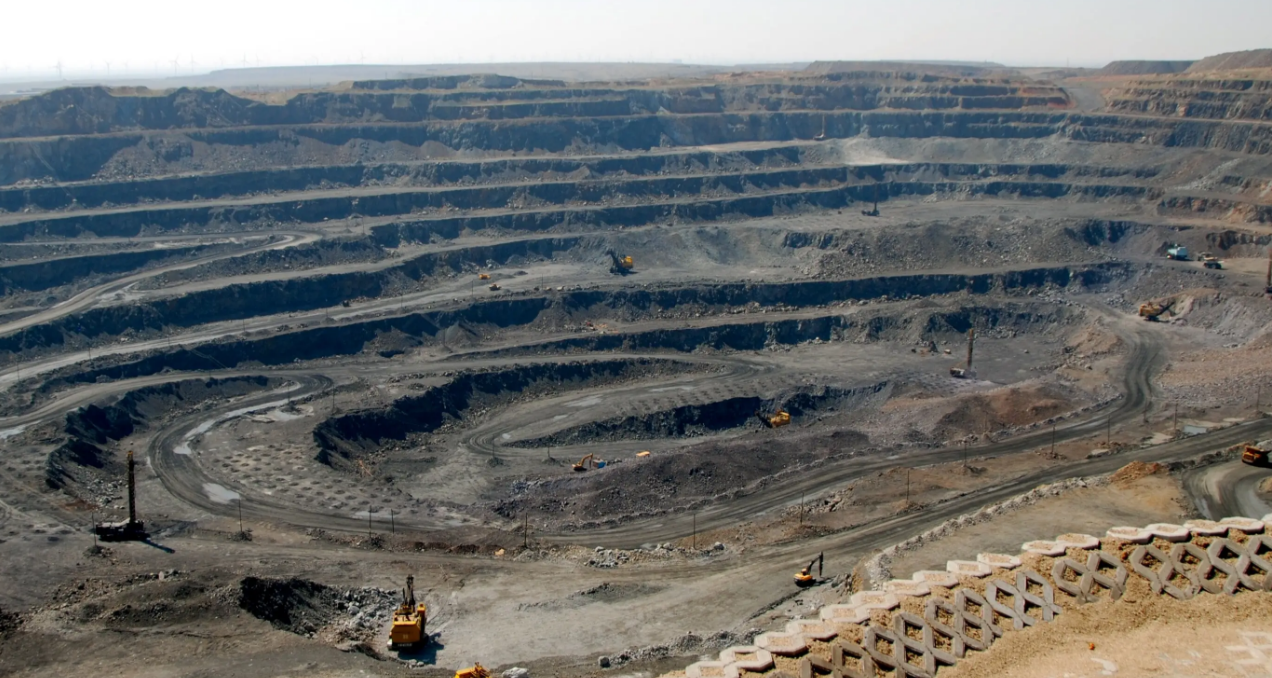
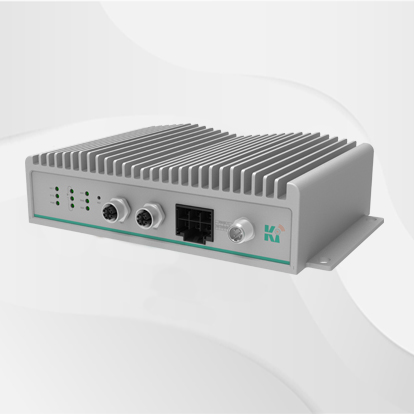
Let me tell you how V2X technology is turning mining trucks into “intelligent swarms,” plus share my hands-on experience with the SV910 dual 5G vehicle gateway.
Traditional mining operations relied heavily on manual dispatch—inefficient and dangerous. V2X technology has completely changed the game.
In mining platoons, V2V (vehicle-to-vehicle) communication is absolutely critical. Picture this: 10 trucks, each weighing 200 tons, moving in formation. When the lead truck brakes, turns, or changes lanes, every truck behind gets that information in under 5 milliseconds and responds in sync.
Here’s what V2V continuously exchanges:
Precise positioning (centimeter-level accuracy)
Real-time speed and acceleration data
Steering intentions and angles
Braking status and safe distance calculations
Payload information
This coordination makes the entire fleet operate like a single organism. Any status change at one node instantly propagates to all others. Vehicle spacing can shrink to 5-8 meters, compared to the 30-50 meters required for human-driven convoys.
V2I (vehicle-to-infrastructure) makes loading zones, weighing stations, and traffic signals intelligent. A loading point tells approaching trucks: “Three loads waiting here, estimated 8 minutes, suggest you wait at position 2.” The weighing station broadcasts: “Currently 7 trucks queued, recommend using station 4.”
This information exchange eliminates blind driving. Vehicles make optimal path decisions based on real-time data instead.

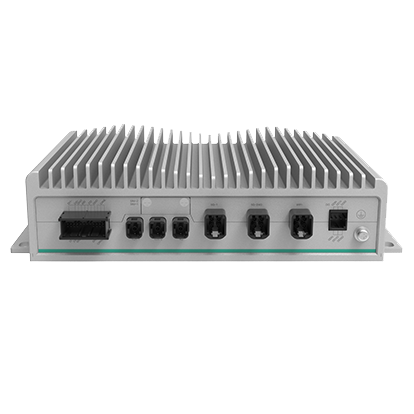
Six vehicle Ethernet ports handle the heavy data flow.
Two M12 industrial Ethernet interfaces, 2 CAN ports (expandable to 3), 2 DI and 2 DO channels. The T1/TX interface combined with GPTP/PTP time synchronization creates a rock-solid foundation for coordinated operations.
The real value lies in deep V2X technology integration. Dual 5G networks provide ultra-high bandwidth perfectly suited for vehicle-to-vehicle (V2V), vehicle-to-infrastructure (V2I), vehicle-to-pedestrian (V2P), and vehicle-to-cloud (V2C) data exchange across all domains. Millisecond-level response enables unified transmission of chassis control signals, entertainment system data, and autonomous driving commands—stable and secure.
Through extensive interfaces, it connects to various vehicle equipment and enables remote vehicle status monitoring. It supports low-power sleep mode with remote wake-up capability for vehicle startup and operations management, saving energy while improving operational efficiency.

Why dual 5G? Network stability matters more than anything in mining environments. One channel handles V2X real-time data exclusively, while the other processes equipment monitoring and non-real-time operations.
During field testing, even when one 5G signal degraded, the other seamlessly took over. You barely notice any interruption in communication.
GPTP/PTP protocol support through T1/TX interface achieves nanosecond-level network-wide time synchronization. Why such extreme precision? Because in high-speed platoons, just a few milliseconds of time deviation can cause incorrect vehicle spacing calculations.
Signal Coverage Issues: Mine pits affect 5G propagation, requiring dedicated network base stations. SV910’s dual 5G design shows clear advantages here—when one path weakens, the other picks up the slack.
Data Security Considerations: V2X involves sensitive operational data requiring end-to-end encryption.
Strict Real-Time Requirements: Platoon control demands ultra-low latency, necessitating protocol stack optimization. Field testing shows SV910 controls end-to-end latency within 5ms, meeting real-time control requirements.
SV910 supports low-power sleep and remote wake-up. Mining trucks enter deep sleep during non-operational hours, minimizing power consumption. When operations start, the entire fleet can be remotely awakened via 5G network—”cloud-based one-touch startup.”
For large-scale mines running 24-hour shifts, this functionality dramatically reduces manual inspection costs and improves equipment utilization rates.
V2X application in mining platoons has moved from concept to practical implementation. Compared to passenger vehicle V2X scenarios with their complexity, mining environments are more controllable, making technical validation easier and commercial value more direct.
Looking at technology trends, future developments will further integrate edge computing capabilities, supporting local data processing and intelligent decision-making. TSN (Time-Sensitive Networking) technology introduction will further enhance network determinism.
After several months testing SV910 in actual mining operations, the dual 5G architecture proved its worth. Network handover happens so smoothly that platoon operations continue without interruption even when switching between carriers.
The vehicle Ethernet ports handle massive sensor data flows without choking. CAN bus integration lets the gateway communicate directly with truck control systems—no additional converters needed.
Remote diagnostics caught several potential issues before they became problems. The system flagged abnormal vibration patterns in one truck’s drivetrain, preventing what could have been a costly breakdown in the middle of a shift.

V2X technology isn’t futuristic anymore—it’s working right now in mines across the globe. The SV910 dual 5G gateway represents the kind of ruggedized, purpose-built hardware these environments demand.
For operations managers evaluating V2X solutions, focus on these critical factors:
Network redundancy (dual 5G isn’t optional)
Time synchronization precision (nanosecond-level matters)
Industrial-grade interfaces (consumer hardware won’t cut it)
Remote management capabilities (reduces operational costs)
The mining industry’s embrace of V2X vehicle platooning demonstrates how autonomous vehicle technology delivers immediate ROI in controlled environments. Unlike urban autonomous driving with its unpredictable variables, mines offer the perfect testbed for refining these systems before broader deployment.
If you’re implementing V2X in mining operations or evaluating hardware options, the SV910 deserves serious consideration. Its dual 5G architecture, comprehensive interface selection, and proven field reliability make it a solid choice for demanding industrial applications.
莫