

搜索
- 葡萄酒 | 威士忌 | 白兰地 | 啤酒 -
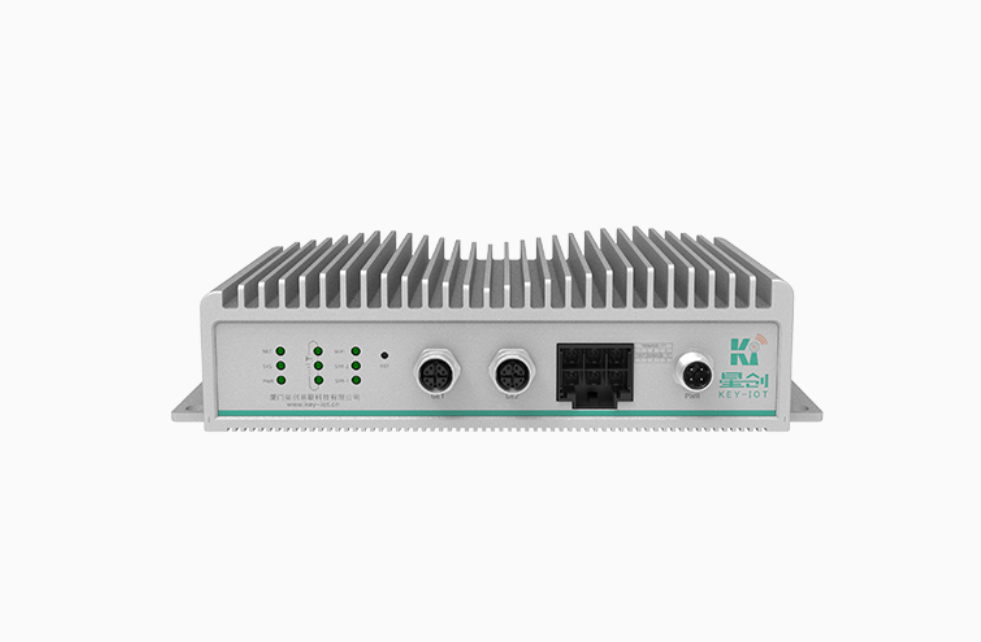
The automotive ethernet router has become central to vehicle connectivity infrastructure. As vehicles evolve into sophisticated data centers on wheels, the requirements for in-vehicle networking equipment have transformed dramatically. Modern automotive ethernet routers must handle multiple communication protocols, process massive sensor data streams, and maintain real-time performance under challenging conditions.
According to the U.S. Department of Transportation’s Plan to Accelerate V2X Deployment, the target is achieving 100% V2X coverage across American highways by 2036. This regulatory push, combined with China’s vehicle-road-cloud integration initiatives, creates urgent demand for capable automotive ethernet router solutions.
Recent implementations demonstrate this evolution. Shanghai Mobile’s 5G-A connected vehicle demonstration routes showcase how modern routers integrate sensing technology with V2X messaging capabilities. These real-world deployments reveal what contemporary automotive ethernet router specifications must include.
Every automotive ethernet router needs robust processing capability. The device simultaneously manages data forwarding, protocol conversion, security encryption, and time synchronization. These parallel operations demand serious computational resources.
The SV910 automotive ethernet router employs a quad-core 64-bit Cortex-A55 processor. This ARM architecture choice reflects industry trends favoring power efficiency balanced with performance. Multi-core designs prevent any single intensive task from creating system bottlenecks.
Data volumes in connected vehicles grow exponentially with each autonomous driving level increase. LiDAR point clouds, multi-camera video feeds, and millimeter-wave radar tracking all flow through the automotive ethernet router. Insufficient processing power creates network congestion that compromises safety-critical functions.
Industry standards from IEEE 802.3 define automotive Ethernet physical layer requirements, but processing specifications depend on specific implementation needs. Vehicle manufacturers must evaluate their sensor arrays and data throughput requirements when selecting an automotive ethernet router platform.
Modern automotive ethernet router designs incorporate dual communication paradigms. 5G cellular networks handle long-distance vehicle-to-cloud connectivity, while V2X direct communications manage short-range vehicle-to-vehicle and vehicle-to-infrastructure interactions.
The SV910 automotive ethernet router implements dual 5G architecture addressing real-world carrier coverage gaps. Different carriers maintain varying base station distributions across geographic areas. An automotive ethernet router with dual SIM capability automatically selects optimal links or distributes traffic across both networks simultaneously.
This multi-network acceleration proves critical for continuous connectivity applications. Fleet management platforms, remote diagnostic systems, and real-time monitoring services cannot tolerate frequent disconnections. The automotive ethernet router provides link redundancy through its dual 5G implementation.
[Internal link: 5G vehicle connectivity best practices]
V2X functionality serves complementary purposes. Partnership deployments like Gosuncn Technology with Ruqi Travel demonstrate practical applications. Their 5G intelligent connected vehicle terminals deliver 16 warning types including forward collision alerts and blind spot notifications. These functions demand the ultra-low latency that V2X PC5 direct mode provides.
The SAE J3161/1 standard defines on-board system requirements for V2X communications. An automotive ethernet router supporting both 5G and V2X can intelligently route traffic based on application requirements—large transfers through 5G networks, time-critical warnings via V2X broadcasts.
Time synchronization capability distinguishes basic network switches from true automotive ethernet router solutions. Autonomous driving systems depend on multi-sensor fusion where LiDAR, cameras, and radar each collect independent data streams. Misaligned timestamps corrupt fusion algorithms and create phantom object detections.
The SV910 automotive ethernet router supports IEEE 1588 PTP and 802.1AS GPTP time synchronization protocols. PTP originated in industrial automation for precision timing requirements. GPTP represents the automotive industry’s optimized adaptation specifically for automotive Ethernet characteristics.
TSN (Time-Sensitive Networking) technology integration transforms the automotive ethernet router from simple packet forwarder to deterministic network coordinator. TSN provides not just synchronization but also traffic shaping and bandwidth reservation mechanisms. Safety-critical autonomous driving systems require this predictable, guaranteed performance.
The IEEE 802.1AS standard defines timing and synchronization for time-sensitive applications. GPTP protocol operation within an automotive ethernet router involves selecting a master clock node with other devices synchronizing to that reference. The router’s central network position makes it ideal for master clock duties, distributing precise timing to all ECUs and sensors through its Ethernet interfaces.
An effective automotive ethernet router must accommodate diverse in-vehicle devices. Communication interface variety determines how many and which types of devices can connect to the network.
The SV910 automotive ethernet router provides 6 automotive Ethernet ports supporting T1 standards. Traditional RJ45 Ethernet requires 4 twisted wire pairs; T1 interfaces need only 1 pair. This single-pair Ethernet substantially reduces harness weight and cost—critical factors for vehicle manufacturers pursuing lightweighting goals.
[Internal link: automotive wiring harness optimization techniques]
Automotive ethernet router port speeds must match connected equipment capabilities. Cameras typically operate satisfactorily with 100BASE-T1 hundred-megabit interfaces. LiDAR systems generating dense point clouds require 1000BASE-T1 gigabit connections. The SV910’s mixed-speed interface configuration accommodates both device categories without requiring additional switching equipment.
Two M12 industrial Ethernet ports expand automotive ethernet router connectivity options. These interfaces target industrial control equipment, network storage devices, and external diagnostic tools. M12 connectors offer superior mechanical strength and vibration resistance compared to RJ45—essential for automotive environmental challenges.
Three CAN bus interfaces enable the automotive ethernet router to bridge traditional vehicle networks with modern Ethernet architectures. Separate CAN networks for powertrain, chassis, and body systems prevent cross-system interference. The automotive ethernet router facilitates data exchange and protocol translation between these isolated domains.
According to CAN in Automation (CiA) specifications, proper CAN network segmentation improves reliability and diagnostic capability. An automotive ethernet router serving as the central interconnection point must support multiple simultaneous CAN interfaces.
Digital I/O provides auxiliary control capabilities. The automotive ethernet router can monitor vehicle status through digital inputs detecting ignition state or door positions. Relay outputs enable remote power control for peripheral devices—implementing wake-on-demand scenarios or managing camera heater activation.
Electric and hybrid vehicles impose strict power consumption requirements on all onboard systems. An automotive ethernet router with excessive standby power drain gradually depletes batteries during extended parking, potentially preventing vehicle starting.
The SV910 automotive ethernet router emphasizes low power consumption through multiple operating modes. Full operation maintains all connectivity and processing functions. Standby mode deactivates non-essential modules while preserving basic network presence. Deep sleep further reduces consumption, maintaining only wake circuitry.
[Internal link: EV power management system design]
Remote and local wake functionality paired with power modes enables flexible strategies. After shutdown, the automotive ethernet router enters low power standby. Cloud platforms needing data collection send wake signals triggering automatic startup. Scheduled wake intervals can also complete maintenance tasks before returning to sleep mode.
This tiered power management proves essential for fleet operations. Large parked vehicle groups running full power exhaust batteries rapidly. Complete power-off prevents remote management and emergency response capabilities. The automotive ethernet router balances consumption against functionality requirements through intelligent mode switching.
As the boundary device between in-vehicle and external networks, automotive ethernet router security directly impacts vehicle information protection. Recent years have witnessed increasing attacks targeting vehicle connectivity. Comprehensive security mechanisms are no longer optional features.
The SV910 automotive ethernet router implements multi-layer protection. Network-layer firewall rules filter unauthorized access attempts, permitting only approved communications. Transport-layer VPN encrypted tunnels secure remote connections. Device-layer authentication and authorization prevent rogue equipment from accessing vehicle networks.
In-vehicle networks typically segment into security domains. Entertainment domains connecting infotainment and navigation systems maintain relatively low security classifications. Control domains linking powertrain and chassis systems represent safety-critical infrastructure. The automotive ethernet router must enforce domain isolation through VLAN separation and firewall policies, preventing low-security compromises from propagating to high-security systems.
The ISO/SAE 21434 standard addresses cybersecurity engineering for road vehicles. Compliance requires automotive ethernet router designs incorporating threat analysis, security testing, and vulnerability management throughout the product lifecycle.
Vehicle-road-cloud integration expands external communication frequency. Roadside equipment interactions and cloud platform data exchanges all present potential attack vectors. The automotive ethernet router must inspect and filter both inbound and outbound traffic, identifying and blocking suspicious patterns.
Consumer electronics operate in controlled environments. An automotive ethernet router confronts temperature extremes, intense vibrations, and electromagnetic interference. Automotive-grade certification demands passing rigorous reliability testing before vehicle installation approval.
Temperature tolerance represents the first qualification hurdle. Vehicle interiors experience dramatic temperature swings—northern winters reach minus forty degrees, summer sun exposure pushes interior temperatures past eighty degrees. The automotive ethernet router must function reliably across this entire range without crashes, reboots, or performance degradation.
[Internal link: automotive environmental testing requirements]
Vibration and shock testing verifies mechanical durability. Operating vehicles generate vibration frequencies spanning from engine idle low-frequency oscillations to road impact high-frequency spikes. Automotive ethernet router PCBs, connectors, and housings require sufficient structural integrity to withstand continuous vibration without developing loose connections or solder joint failures.
Electromagnetic compatibility proves particularly challenging in vehicle environments. Ignition systems, motor controllers, and high-power audio equipment all generate electromagnetic noise. The automotive ethernet router must both resist external interference for normal operation while avoiding excessive emissions that disrupt other vehicle systems.
Testing protocols from ISO 16750 and ISO 7637 define automotive electrical and electronic equipment environmental conditions and testing. Automotive ethernet router certification requires demonstrating compliance with these standards covering temperature cycling, vibration profiles, and electromagnetic emissions.
Vehicle fleet scaling makes on-site maintenance economically impractical. Remote management capabilities transform automotive ethernet router economics, dramatically reducing operational costs while improving administrative efficiency.
Network connectivity through the automotive ethernet router enables operation platforms to monitor vehicle status real-time, collect performance data, issue control commands, and conduct remote diagnostics. These functions prove essential for logistics fleets, taxi services, and car-sharing businesses managing hundreds or thousands of vehicles.
Firmware upgrade capability represents critical remote management functionality. In-vehicle equipment software continuously evolves—fixing vulnerabilities, adding features, optimizing performance. Requiring vehicles return to facilities for every upgrade creates unacceptable cost and schedule impacts. OTA (Over-The-Air) updates through the automotive ethernet router enable automatic firmware installation during parking periods without service disruption.
[Internal link: OTA update best practices for vehicle fleets]
Secure upgrade mechanisms must handle failure scenarios gracefully. If new firmware contains defects preventing device startup, automatic rollback to previous versions becomes necessary. Dual-partition firmware architecture downloads new code to backup storage, validates functionality before switching, and ensures failed upgrades don’t brick the automotive ethernet router.
Log collection aids troubleshooting and optimization. The automotive ethernet router records network status, error conditions, and performance metrics. Remote log export and analysis quickly identify root causes, eliminating expensive diagnostic truck rolls for simple issues.
Vehicle lifecycles typically span a decade. Automotive ethernet router designs must anticipate technology evolution. Equipment installed today will need supporting new communication standards and applications years later. Without extensible architecture, premature complete replacement becomes inevitable.
5G technology itself continues evolving through successive 3GPP releases adding new capabilities. 5G-A (5G-Advanced) deployments already demonstrate enhanced performance in Shanghai Mobile’s demonstration routes. Future 6G development progresses in parallel. Automotive ethernet router designs with replaceable communication modules can theoretically support emerging standards through module upgrades.
V2X technology similarly evolves from current LTE-V2X based on 4G toward 5G-based NR-V2X. NR-V2X delivers improvements in bandwidth, latency, and reliability better suited for advanced autonomous driving scenarios. Automotive ethernet router V2X modules supporting software updates or hardware replacement can follow this technology progression.
Vehicle network protocols continually advance. Ethernet speeds increase from hundred-megabit to gigabit with higher rates emerging. TSN standards expand adding new features. Novel security and application protocols appear regularly. Open software architecture in the automotive ethernet router enables new protocol support through updates, extending viable service life.
Choosing an appropriate automotive ethernet router requires evaluating multiple technical dimensions. Processing performance determines data throughput capacity. Communication capabilities define supported application scenarios. Interface configurations establish device connectivity options. Time synchronization accuracy affects sensor fusion quality. Power consumption impacts energy efficiency. Security mechanisms determine vulnerability resistance. Environmental tolerance establishes reliability. Remote management features influence operational costs. Extensibility relates to investment protection.
Different applications emphasize varying capabilities. Passenger vehicles may prioritize cost and power consumption. Commercial vehicles value reliability and remote management more highly. Autonomous vehicles demand superior time synchronization and real-time performance. Fleet operations require extensive network redundancy and monitoring.
The SV910 automotive ethernet router represents a highly integrated solution approach. Its quad-core processor provides substantial computing power. Dual 5G plus V2X covers mainstream communication requirements. Rich interface selection supports diverse device connections. TSN time synchronization meets sensor fusion needs. Low power modes suit new energy vehicles. This integration simplifies network architecture while reducing component counts.
High integration naturally increases single-point failure risk—one device integrating numerous functions creates vulnerability where malfunction impacts multiple subsystems. Robust reliability engineering through redundancy design and fault isolation mechanisms mitigates these concerns in production automotive ethernet router implementations.
Industry trends indicate vehicle networks evolving toward domain controller architectures and centralized computing platforms. Future developments may produce integrated platforms combining gateway, domain controller, and edge computing functions. Regardless of architectural evolution, core requirements for communication capability, computing power, real-time performance, and reliability remain constant. Implementation methods and integration levels continuously advance, but fundamental automotive ethernet router functions persist.
The parallel development of 5G and V2X will continue for the foreseeable future. These technologies serve complementary roles rather than competitive replacement. An effective automotive ethernet router must support both communication methods, intelligently selecting optimal links for specific applications. Multi-network acceleration, intelligent switching, and collaborative operation define the connectivity evolution path.
Time synchronization importance increases with autonomous driving advancement. L2 assisted driving tolerates relatively loose synchronization. L4 and L5 autonomy impose stringent precision requirements for multi-sensor fusion and vehicle-road collaborative decision-making. TSN technology adoption in vehicle networks will expand, becoming standard automotive ethernet router configuration.
Security protection requirements similarly intensify. Vehicle networking proliferation increases attack surface and incident frequency. The automotive ethernet router as network entry point requires multi-layered defense. Firewall alone proves insufficient—comprehensive protection combines intrusion detection, anomaly analysis, secure boot, and firmware signature verification for defense in depth.
Vehicle networks transition from distributed architecture toward domain and central concentration. CAN buses upgrade to Ethernet. 4G migrates to 5G. Single-vehicle intelligence develops into vehicle-road collaboration. These changes place higher demands on automotive ethernet router capabilities while creating expanded application opportunities. Success requires deep understanding of application requirements and accurate assessment of technology trends.
Deploying an automotive ethernet router in production vehicles requires careful planning beyond basic specification matching. System integration challenges emerge from combining multiple subsystems through a central networking hub.
Network topology design affects automotive ethernet router performance significantly. Star topology with the router at center provides maximum control and monitoring capability. Each device connects directly to router ports, simplifying troubleshooting and bandwidth allocation. Ring topology offers redundancy but increases complexity. Hybrid approaches balance these tradeoffs based on reliability requirements and cost constraints.
Bandwidth planning prevents network congestion. The automotive ethernet router must allocate sufficient capacity for each data stream without overprovisioning expensive high-speed interfaces. Safety-critical control messages require guaranteed bandwidth through QoS (Quality of Service) mechanisms. Infotainment content can use best-effort delivery with lower priority.
Cable length limitations matter for automotive Ethernet implementations. 100BASE-T1 typically supports up to 15 meters, while 1000BASE-T1 reaches 40 meters under optimal conditions. The automotive ethernet router placement within vehicle architecture must account for these physical constraints while minimizing cable runs to reduce weight and cost.
Grounding and shielding affect electromagnetic compatibility. Improper grounding can create ground loops causing data corruption or equipment damage. The automotive ethernet router requires single-point grounding following automotive electrical system conventions. Shielded cables and proper connector shell bonding prevent EMI ingress and egress.
Thermal management becomes critical in confined vehicle spaces. The automotive ethernet router generates heat during operation, and ambient temperatures already challenge cooling capacity. Passive cooling through aluminum housings transfers heat to vehicle structure. Active cooling with fans adds complexity and potential failure modes. Placement near air conditioning vents or away from heat sources like engine compartments improves thermal margins.
Comprehensive testing validates automotive ethernet router functionality before production deployment. Test procedures span multiple categories from basic connectivity to extreme environmental stress.
Functional testing verifies each interface operates correctly. CAN bus transceivers must handle all specified baud rates without bit errors. Ethernet ports negotiate proper speeds and duplex modes. Digital inputs accurately detect voltage thresholds. Relay outputs switch reliably under rated loads. The automotive ethernet router must pass these basic checks before advancing to system-level testing.
Performance testing measures throughput, latency, and packet loss under various load conditions. Maximum sustained throughput determines whether the automotive ethernet router meets bandwidth requirements. Latency measurements confirm real-time performance for safety-critical messages. Packet loss rates must stay below thresholds ensuring reliable communication. Testing combinations of simultaneous traffic streams reveals potential bottlenecks.
Interoperability testing confirms the automotive ethernet router works with devices from different manufacturers. Protocol implementations vary slightly between vendors despite following common standards. The automotive ethernet router must successfully communicate with cameras, radar units, LiDAR sensors, ECUs, and telematics devices from the supply chain. Interoperability labs maintain test suites covering major equipment suppliers.
Environmental testing subjects the automotive ethernet router to temperature extremes, vibration profiles, and humidity cycles matching automotive specifications. Temperature chambers cycle between minus forty and plus eighty-five degrees Celsius while the device operates continuously. Vibration tables replicate road conditions from smooth highways to rough terrain. Salt spray tests verify corrosion resistance. These tests identify design weaknesses before field failures occur.
EMC testing measures electromagnetic emissions and immunity. Radiated emissions testing places the automotive ethernet router in an anechoic chamber with receiving antennas measuring field strength across frequency ranges. Conducted emissions testing measures noise on power and signal cables. Immunity testing exposes the device to external electromagnetic fields, electrostatic discharge, and electrical transients while monitoring for malfunctions.
Security testing attempts to breach automotive ethernet router defenses through various attack vectors. Penetration testing tries to gain unauthorized access through network interfaces. Fuzzing bombards protocol stacks with malformed packets seeking buffer overflows or parsing errors. Side-channel analysis looks for information leakage through power consumption or timing variations. Vulnerability scanning compares software versions against known exploit databases.
Multiple standards bodies define requirements for automotive ethernet router designs. Compliance with relevant standards facilitates certification and customer acceptance.
IEEE 802.3 defines Ethernet physical layer specifications including 100BASE-T1 and 1000BASE-T1 automotive variants. These standards specify electrical signaling, cable requirements, and connector types. An automotive ethernet router claiming Ethernet support must implement these physical layer standards correctly.
IEEE 802.1 covers bridging, VLANs, and time-sensitive networking. The 802.1Q standard defines VLAN tagging allowing network segmentation through a single physical infrastructure. IEEE 802.1AS (GPTP) provides time synchronization. IEEE 802.1Qav addresses traffic shaping for audio/video streams. The automotive ethernet router leverages these standards creating managed networks with quality of service guarantees.
AUTOSAR (AUTomotive Open System ARchitecture) defines software architecture for automotive ECUs including communication stacks. AUTOSAR Adaptive Platform targets high-performance computing applications like autonomous driving. An automotive ethernet router interfacing with AUTOSAR systems must support defined communication protocols and service discovery mechanisms.
SOME/IP (Scalable service-Oriented MiddlewarE over IP) provides service-oriented communication over Ethernet networks. This protocol enables dynamic service discovery and remote procedure calls between ECUs. The automotive ethernet router may implement SOME/IP routing or simply forward SOME/IP traffic transparently.
DDS (Data Distribution Service) offers another middleware option for automotive applications. DDS provides publish-subscribe communications with quality of service controls. Some automotive ethernet router implementations include DDS-aware features optimizing traffic for DDS applications.
ISO 11898 defines CAN bus specifications that the automotive ethernet router must support when bridging CAN networks. ISO 11898-1 covers the data link layer, while ISO 11898-2 defines the physical layer for high-speed CAN. CAN FD extensions increase data rates and payload sizes.
SAE J1939 defines higher-layer protocols for heavy-duty vehicles using CAN. An automotive ethernet router in commercial vehicles may need J1939 support for engine, transmission, and brake system communications.
ISO 26262 addresses functional safety for automotive systems. While the automotive ethernet router itself may not be safety-critical, it often carries safety-related communications. ISO 26262 compliance demonstrates systematic development processes reducing failure risks.
Industry dynamics drive automotive ethernet router evolution beyond pure technical requirements. Understanding market forces helps predict future directions.
Vehicle electrification accelerates adoption of high-bandwidth networks. Electric vehicles eliminate engine noise masking electrical interference. Battery management systems require real-time monitoring of hundreds of cells. Regenerative braking demands precise coordination between motors and friction brakes. These requirements favor Ethernet over legacy CAN buses. The automotive ethernet router becomes central to EV architecture.
Autonomous driving pushes network performance requirements higher. Sensor fusion algorithms consume massive bandwidth processing LiDAR, radar, and camera inputs. Safety redundancy demands duplicate networks with independent automotive ethernet routers. Deterministic latency through TSN ensures timely perception and control updates. L4 and L5 autonomy cannot function without capable networking infrastructure.
Over-the-air updates shift from luxury feature to competitive necessity. Software-defined vehicles require frequent updates delivering new features, security patches, and performance improvements. The automotive ethernet router must support reliable OTA delivery across entire vehicle networks. Failed updates cannot leave vehicles inoperable. Bandwidth requirements grow as update packages include gigabytes of data.
Cybersecurity concerns elevate automotive ethernet router security features from nice-to-have to mandatory. High-profile vehicle hacking demonstrations raise awareness of connectivity risks. Regulations increasingly mandate security measures. The automotive ethernet router as network gateway must implement defense in depth protecting vehicle systems.
Supply chain globalization affects automotive ethernet router sourcing and certification. Vehicles sell globally requiring compliance with regulations across markets. Electromagnetic compatibility standards differ between regions. Safety certifications vary by jurisdiction. The automotive ethernet router must navigate this regulatory complexity supporting worldwide vehicle sales.
Cost pressures remain constant despite increasing functionality. Automotive margins are thin and competitive. The automotive ethernet router must deliver advanced features at price points compatible with volume production. Integration reduces component counts lowering bill-of-materials costs. Software differentiation creates value without proportional hardware expense.
The automotive ethernet router has transformed from simple network bridge to sophisticated communication hub. Modern implementations like the SV910 demonstrate how integration of processing power, dual 5G connectivity, V2X capability, TSN synchronization, diverse interfaces, security features, and power management creates comprehensive solutions for connected vehicle requirements.
As vehicles become increasingly software-defined and connectivity-dependent, automotive ethernet router specifications will continue advancing. Understanding these requirements—from communication protocols to environmental resilience—enables informed technology selection supporting both current needs and future evolution in the rapidly developing automotive networking landscape.
The automotive ethernet router sits at the intersection of traditional automotive engineering and modern information technology. Success requires expertise spanning mechanical packaging, electromagnetic compatibility, network protocols, cybersecurity, and real-time systems. Products meeting this multidisciplinary challenge will power the next generation of intelligent, connected vehicles transforming transportation.
莫